There are biblical examples of God protecting people by preventing something from happening.
One very clear example is Balaam.
God says: “Behold, I am come out to withstand thee, because thy way is perverse before me.”— Numbers 22:32
God prevented Balaam from proceeding in the direction he was going.
Another example is Joseph.
His brothers' actions were evil: “But as for you, ye thought evil against me”
Yet Joseph says: “but God meant it unto good”— Genesis 50:20
That's a profound biblical truth: God can work through circumstances without approving the evil involved in them.
10. Romans 8 gives us the bigger promise
This is probably the passage most closely connected to the drama's theme:
“And we know that all things work together for good to them that love God, to them who are the called according to his purpose.”— Romans 8:28
Notice carefully: It does not say: “Everything that happens is good.”
It says God works all things together for good.
And the next verses tell us what that “good” is ultimately connected with:
“For whom he did foreknow, he also did predestinate to be conformed to the image of his Son”— Romans 8:29
So biblically, the ultimate “good” isn't necessarily: a better job, more money, a new husband, or an easier life.
The context points toward being conformed to Christ.
That's a major correction to the kind of message Christian dramas sometimes communicate.
11. God isn't promising Linda the life she planned
This is important.
The biblical promise isn't: “Trust God and He will give you the future you wanted.”
Jesus says: “In the world ye shall have tribulation”— John 16:33
Paul says: “we must through much tribulation enter into the kingdom of God.”— Acts 14:22
And James says: “My brethren, count it all joy when ye fall into divers temptations;
Knowing this, that the trying of your faith worketh patience.”— James 1:2–3
God's purpose isn't necessarily to restore the exact life Linda imagined.
He may.
He may not.
The biblical promise is deeper: He will not abandon His people, and He can use even suffering for His purposes.
12. Waiting is also biblical
Linda's uncertainty creates another biblical theme: waiting on the Lord.
Psalm 27 says: “Wait on the LORD: be of good courage, and he shall strengthen thine heart: wait, I say, on the LORD.”— Psalm 27:14
Isaiah says: “But they that wait upon the LORD shall renew their strength”— Isaiah 40:31
Waiting isn't necessarily passive inactivity.
It is trusting God rather than trying to force an outcome.
13. But waiting doesn't mean doing nothing
Scripture also says: “Whatsoever thy hand findeth to do, do it with thy might”— Ecclesiastes 9:10
And Paul says: “Not slothful in business; fervent in spirit; serving the Lord.”— Romans 12:11
So, Linda doesn't have to sit around trying to decode every closed door.
She can pray.
She can seek wisdom.
She can work.
She can obey Scripture.
She can serve.
She can make wise decisions.
And she can leave the results with God.
14. The story's strongest biblical lesson
I'd actually adjust the drama's central statement slightly.
Instead of: “God closed every door because He was protecting her.”
Scripture gives us something more certain: “She didn't understand what God was doing, but she learned to trust God because His character and promises were more reliable than her circumstances.”
That's much safer biblically.
Because we don't know every reason God permits particular events.
But we do know what Scripture tells us about God.
“The LORD is righteous in all his ways, and holy in all his works.”— Psalm 145:17
“God is our refuge and strength, a very present help in trouble.”— Psalm 46:1
“I will never leave thee, nor forsake thee.”— Hebrews 13:5
The biblical progression of Linda's story
Her journey could therefore be understood like this: She had a plan. → James 4:13–15
The plan collapsed. → Psalm 13:1; Job
She wondered whether God had forgotten her. → Isaiah 49:15–16
She couldn't understand God's ways. → Isaiah 55:8–9
She learned not to lean on her own understanding. → Proverbs 3:5–6
She learned to wait on God. → Psalm 27:14
She discovered that God can redirect His people. → Acts 16:6–10
She learned that God can work through painful circumstances. → Romans 8:28
But the ultimate purpose was not merely getting her old life back. → Romans 8:29
The goal was learning to trust God and become more like Christ.
And that's a much deeper biblical message than simply “God closed the door because He had a better opportunity waiting.”
Sometimes God closes a door.
Sometimes He opens one.
Sometimes He tells us to wait.
Sometimes He allows us to walk through suffering without explaining why.
But in all of those circumstances, Scripture continually brings us back to the same place:
“Trust in the LORD with all thine heart; and lean not unto thine own understanding.”— Proverbs 3:5
The key is to distinguish between what the Bible actually says and what the drama is assuming.
The statement “some closed doors are not punishment—but protection” can be biblically supported in certain situations, but Scripture does not teach that every disappointment or closed opportunity was specifically God protecting someone. We have to be careful not to claim knowledge of God's hidden purposes where Scripture hasn't revealed them.
1. “Linda thought she had her future figured out”
Scripture directly challenges human confidence about the future.
James says: “Go to now, ye that say, To day or to morrow we will go into such a city, and continue there a year, and buy and sell, and get gain”— James 4:13
Then: “Whereas ye know not what shall be on the morrow.” — James 4:14
And: “For that ye ought to say, If the Lord will, we shall live, and do this, or that.”
— James 4:15
The biblical posture isn't: “I know exactly how my future will unfold.”
It's: “If the Lord wills”
Proverbs says: “Boast not thyself of to morrow; for thou knowest not what a day may bring forth.” — Proverbs 27:1
So, Linda's first lesson isn't necessarily that God is closing doors.
It's that she doesn't know tomorrow, but God does.
2. “Her marriage ended”
We should be careful here.
The Bible does not teach that every broken marriage is necessarily something God deliberately caused as a “closed door.”
Scripture acknowledges the reality of divorce and broken relationships in a fallen world.
Jesus says: “Moses because of the hardness of your hearts suffered you to put away your wives: but from the beginning it was not so.”— Matthew 19:8
Jesus points back to God's original design for marriage, while acknowledging human sinfulness.
So, if Linda's marriage ended, we shouldn't automatically say: “God closed that door because He has something better.”
That may be a person's interpretation, but Scripture doesn't give us permission to know God's specific hidden purpose in every individual tragedy.
What Scripture does tell her is what God is like in the middle of it.
3. “Her finances collapsed”
Again, Scripture doesn't give us a formula saying: Financial loss = God closing a door.
Job experienced catastrophic loss.
And Job's story is particularly important because his friends repeatedly tried to explain his suffering by assuming they knew exactly why God was allowing it.
But they were wrong.
At the end, God rebuked them: “For ye have not spoken of me the thing which is right”— Job 42:7
That's a warning for us.
We should not confidently explain another person's suffering when God has not revealed the reason.
4. “Every opportunity she pursued seemed to close”
Here we actually find an example in Scripture where God did prevent Paul from going somewhere.
Acts 16 says: “they were forbidden of the Holy Ghost to preach the word in Asia.”— Acts 16:6
Then: “they assayed to go into Bithynia: but the Spirit suffered them not.”— Acts 16:7
Then Paul receives the Macedonian vision: “Come over into Macedonia, and help us.”— Acts 16:9
So, Scripture absolutely contains situations where God redirected someone's plans.
Paul wanted to go one way.
The Spirit prevented him.
Then God directed him another way.
That gives biblical support for the general idea that God can close one path while directing His people toward another.
But notice something important: Paul didn't necessarily know the entire explanation beforehand.
He simply followed God's direction.
5. But here's where we must be careful with the phrase “closed doors”
The Bible never gives us a universal principle: Every closed door = God protecting you.
That's not Scripture.
Sometimes suffering comes because of: our own foolishness,
another person's sin, living in a fallen world, persecution,
ordinary circumstances, or purposes God has not revealed.
Sometimes God clearly redirects someone.
Sometimes Scripture simply says: “Trust in the LORD with all thine heart; and lean not unto thine own understanding.”— Proverbs 3:5
Why?
Because we don't always understand what God is doing.
6. “God has forgotten me”
This is where the story touches something Scripture addresses directly.
God's people sometimes feel forgotten.
David says: “How long wilt thou forget me, O LORD? for ever? how long wilt thou hide thy face from me?”— Psalm 13:1
Notice something important.
David says this to God.
He doesn't hide his distress.
He brings it before God.
And the Psalm eventually ends: “But I have trusted in thy mercy; my heart shall rejoice in thy salvation.”— Psalm 13:5
So biblical faith doesn't mean pretending: “Everything is wonderful.”
It can mean: “I don't understand what God is doing, but I will still trust Him.”
7. Scripture explicitly says God does not forget His people
Isaiah says: “Can a woman forget her sucking child, that she should not have compassion on the son of her womb? yea, they may forget, yet will I not forget thee.”
— Isaiah 49:15
Then God says: “Behold, I have graven thee upon the palms of my hands”— Isaiah 49:16
Jesus gives similar assurance: “Are not five sparrows sold for two farthings, and not one of them is forgotten before God?”— Luke 12:6
And: “Fear not therefore: ye are of more value than many sparrows.”— Luke 12:7
So, Linda's circumstances cannot be interpreted as evidence that God has forgotten her.
Her circumstances may change.
Her plans may change.
Her finances may change.
Her relationships may change.
But God's faithfulness is not determined by those circumstances.
8. “Trust God even when you don't understand”
This part is strongly biblical.
Proverbs 3 says: “Trust in the LORD with all thine heart; and lean not unto thine own understanding.”— Proverbs 3:5
Notice what it doesn't say: “Understand everything God is doing.”
It says: “Trust.”
Isaiah likewise says: “For my thoughts are not your thoughts, neither are your ways my ways, saith the LORD.”— Isaiah 55:8
And: “For as the heavens are higher than the earth, so are my ways higher than your ways”— Isaiah 55:9
There are things God knows that Linda does not know.
Faith doesn't require her to possess God's explanation.













Involve Him in your marriage , bad friend
There are biblical examples of God protecting people by preventing something from happening.
One very clear example is Balaam.
God says: “Behold, I am come out to withstand thee, because thy way is perverse before me.”— Numbers 22:32
God prevented Balaam from proceeding in the direction he was going.
Another example is Joseph.
His brothers' actions were evil: “But as for you, ye thought evil against me”
Yet Joseph says: “but God meant it unto good”— Genesis 50:20
That's a profound biblical truth: God can work through circumstances without approving the evil involved in them.
10. Romans 8 gives us the bigger promise
This is probably the passage most closely connected to the drama's theme:
“And we know that all things work together for good to them that love God, to them who are the called according to his purpose.”— Romans 8:28
Notice carefully: It does not say: “Everything that happens is good.”
It says God works all things together for good.
And the next verses tell us what that “good” is ultimately connected with:
“For whom he did foreknow, he also did predestinate to be conformed to the image of his Son”— Romans 8:29
So biblically, the ultimate “good” isn't necessarily: a better job, more money, a new husband, or an easier life.
The context points toward being conformed to Christ.
That's a major correction to the kind of message Christian dramas sometimes communicate.
11. God isn't promising Linda the life she planned
This is important.
The biblical promise isn't: “Trust God and He will give you the future you wanted.”
Jesus says: “In the world ye shall have tribulation”— John 16:33
Paul says: “we must through much tribulation enter into the kingdom of God.”— Acts 14:22
And James says: “My brethren, count it all joy when ye fall into divers temptations;
Knowing this, that the trying of your faith worketh patience.”— James 1:2–3
God's purpose isn't necessarily to restore the exact life Linda imagined.
He may.
He may not.
The biblical promise is deeper: He will not abandon His people, and He can use even suffering for His purposes.
12. Waiting is also biblical
Linda's uncertainty creates another biblical theme: waiting on the Lord.
Psalm 27 says: “Wait on the LORD: be of good courage, and he shall strengthen thine heart: wait, I say, on the LORD.”— Psalm 27:14
Isaiah says: “But they that wait upon the LORD shall renew their strength”— Isaiah 40:31
Waiting isn't necessarily passive inactivity.
It is trusting God rather than trying to force an outcome.
13. But waiting doesn't mean doing nothing
Scripture also says: “Whatsoever thy hand findeth to do, do it with thy might”— Ecclesiastes 9:10
And Paul says: “Not slothful in business; fervent in spirit; serving the Lord.”— Romans 12:11
So, Linda doesn't have to sit around trying to decode every closed door.
She can pray.
She can seek wisdom.
She can work.
She can obey Scripture.
She can serve.
She can make wise decisions.
And she can leave the results with God.
14. The story's strongest biblical lesson
I'd actually adjust the drama's central statement slightly.
Instead of: “God closed every door because He was protecting her.”
Scripture gives us something more certain: “She didn't understand what God was doing, but she learned to trust God because His character and promises were more reliable than her circumstances.”
That's much safer biblically.
Because we don't know every reason God permits particular events.
But we do know what Scripture tells us about God.
“The LORD is righteous in all his ways, and holy in all his works.”— Psalm 145:17
“God is our refuge and strength, a very present help in trouble.”— Psalm 46:1
“I will never leave thee, nor forsake thee.”— Hebrews 13:5
The biblical progression of Linda's story
Her journey could therefore be understood like this: She had a plan. → James 4:13–15
The plan collapsed. → Psalm 13:1; Job
She wondered whether God had forgotten her. → Isaiah 49:15–16
She couldn't understand God's ways. → Isaiah 55:8–9
She learned not to lean on her own understanding. → Proverbs 3:5–6
She learned to wait on God. → Psalm 27:14
She discovered that God can redirect His people. → Acts 16:6–10
She learned that God can work through painful circumstances. → Romans 8:28
But the ultimate purpose was not merely getting her old life back. → Romans 8:29
The goal was learning to trust God and become more like Christ.
And that's a much deeper biblical message than simply “God closed the door because He had a better opportunity waiting.”
Sometimes God closes a door.
Sometimes He opens one.
Sometimes He tells us to wait.
Sometimes He allows us to walk through suffering without explaining why.
But in all of those circumstances, Scripture continually brings us back to the same place:
“Trust in the LORD with all thine heart; and lean not unto thine own understanding.”— Proverbs 3:5
The key is to distinguish between what the Bible actually says and what the drama is assuming.
The statement “some closed doors are not punishment—but protection” can be biblically supported in certain situations, but Scripture does not teach that every disappointment or closed opportunity was specifically God protecting someone. We have to be careful not to claim knowledge of God's hidden purposes where Scripture hasn't revealed them.
1. “Linda thought she had her future figured out”
Scripture directly challenges human confidence about the future.
James says: “Go to now, ye that say, To day or to morrow we will go into such a city, and continue there a year, and buy and sell, and get gain”— James 4:13
Then: “Whereas ye know not what shall be on the morrow.” — James 4:14
And: “For that ye ought to say, If the Lord will, we shall live, and do this, or that.”
— James 4:15
The biblical posture isn't: “I know exactly how my future will unfold.”
It's: “If the Lord wills”
Proverbs says: “Boast not thyself of to morrow; for thou knowest not what a day may bring forth.” — Proverbs 27:1
So, Linda's first lesson isn't necessarily that God is closing doors.
It's that she doesn't know tomorrow, but God does.
2. “Her marriage ended”
We should be careful here.
The Bible does not teach that every broken marriage is necessarily something God deliberately caused as a “closed door.”
Scripture acknowledges the reality of divorce and broken relationships in a fallen world.
Jesus says: “Moses because of the hardness of your hearts suffered you to put away your wives: but from the beginning it was not so.”— Matthew 19:8
Jesus points back to God's original design for marriage, while acknowledging human sinfulness.
So, if Linda's marriage ended, we shouldn't automatically say: “God closed that door because He has something better.”
That may be a person's interpretation, but Scripture doesn't give us permission to know God's specific hidden purpose in every individual tragedy.
What Scripture does tell her is what God is like in the middle of it.
3. “Her finances collapsed”
Again, Scripture doesn't give us a formula saying: Financial loss = God closing a door.
Job experienced catastrophic loss.
And Job's story is particularly important because his friends repeatedly tried to explain his suffering by assuming they knew exactly why God was allowing it.
But they were wrong.
At the end, God rebuked them: “For ye have not spoken of me the thing which is right”— Job 42:7
That's a warning for us.
We should not confidently explain another person's suffering when God has not revealed the reason.
4. “Every opportunity she pursued seemed to close”
Here we actually find an example in Scripture where God did prevent Paul from going somewhere.
Acts 16 says: “they were forbidden of the Holy Ghost to preach the word in Asia.”— Acts 16:6
Then: “they assayed to go into Bithynia: but the Spirit suffered them not.”— Acts 16:7
Then Paul receives the Macedonian vision: “Come over into Macedonia, and help us.”— Acts 16:9
So, Scripture absolutely contains situations where God redirected someone's plans.
Paul wanted to go one way.
The Spirit prevented him.
Then God directed him another way.
That gives biblical support for the general idea that God can close one path while directing His people toward another.
But notice something important: Paul didn't necessarily know the entire explanation beforehand.
He simply followed God's direction.
5. But here's where we must be careful with the phrase “closed doors”
The Bible never gives us a universal principle: Every closed door = God protecting you.
That's not Scripture.
Sometimes suffering comes because of: our own foolishness,
another person's sin, living in a fallen world, persecution,
ordinary circumstances, or purposes God has not revealed.
Sometimes God clearly redirects someone.
Sometimes Scripture simply says: “Trust in the LORD with all thine heart; and lean not unto thine own understanding.”— Proverbs 3:5
Why?
Because we don't always understand what God is doing.
6. “God has forgotten me”
This is where the story touches something Scripture addresses directly.
God's people sometimes feel forgotten.
David says: “How long wilt thou forget me, O LORD? for ever? how long wilt thou hide thy face from me?”— Psalm 13:1
Notice something important.
David says this to God.
He doesn't hide his distress.
He brings it before God.
And the Psalm eventually ends: “But I have trusted in thy mercy; my heart shall rejoice in thy salvation.”— Psalm 13:5
So biblical faith doesn't mean pretending: “Everything is wonderful.”
It can mean: “I don't understand what God is doing, but I will still trust Him.”
7. Scripture explicitly says God does not forget His people
Isaiah says: “Can a woman forget her sucking child, that she should not have compassion on the son of her womb? yea, they may forget, yet will I not forget thee.”
— Isaiah 49:15
Then God says: “Behold, I have graven thee upon the palms of my hands”— Isaiah 49:16
Jesus gives similar assurance: “Are not five sparrows sold for two farthings, and not one of them is forgotten before God?”— Luke 12:6
And: “Fear not therefore: ye are of more value than many sparrows.”— Luke 12:7
So, Linda's circumstances cannot be interpreted as evidence that God has forgotten her.
Her circumstances may change.
Her plans may change.
Her finances may change.
Her relationships may change.
But God's faithfulness is not determined by those circumstances.
8. “Trust God even when you don't understand”
This part is strongly biblical.
Proverbs 3 says: “Trust in the LORD with all thine heart; and lean not unto thine own understanding.”— Proverbs 3:5
Notice what it doesn't say: “Understand everything God is doing.”
It says: “Trust.”
Isaiah likewise says: “For my thoughts are not your thoughts, neither are your ways my ways, saith the LORD.”— Isaiah 55:8
And: “For as the heavens are higher than the earth, so are my ways higher than your ways”— Isaiah 55:9
There are things God knows that Linda does not know.
Faith doesn't require her to possess God's explanation.
9. “Protection”
Now let's examine that specific claim.
Anticipating part 2.
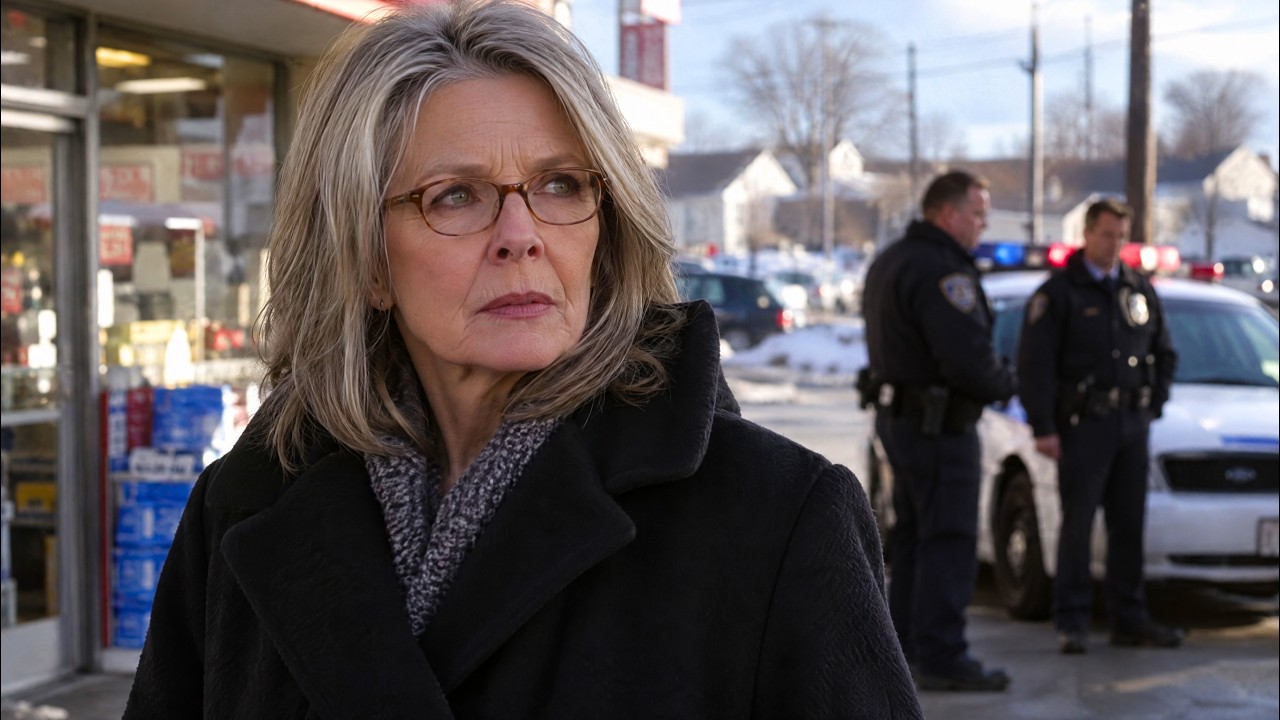
💔 Linda lost her marriage, her home, and almost lost hope… but her story reminded us that a painful chapter is not the end of your story. ❤️
Now I want to know something about YOU…
🌍 Where are you watching from?
Drop your city + country below 👇🏽
Let’s see how far Linda’s story has reached. ❤️
God is always there for His children. Thank You Father God. Amen🙏🙏🙏❤️❤️❤️
Do not be unequally yoked with unbelievers. A Christian woman should never settle for a man who doesn’t want her God.
Cant wait for part 2!!! Inspiring story.
Lovely and inspiring story watching from London England 🇬🇧
Nice ❤
God gave up all of heaven for us
All things work together for the good of them that love the Lord
Be not dismay whatever be tide God will take care for you
🤍🌸🤍Great story 🌸❗️
Life hummmmm 😢❤
Part 2 pleass
Trinidad 🇹🇹 Wallerfield
This world 🌍 doesn't want God 😢But when it's all said and done…there will be so many regrets 😔
Watching from Rwanda East Africa